
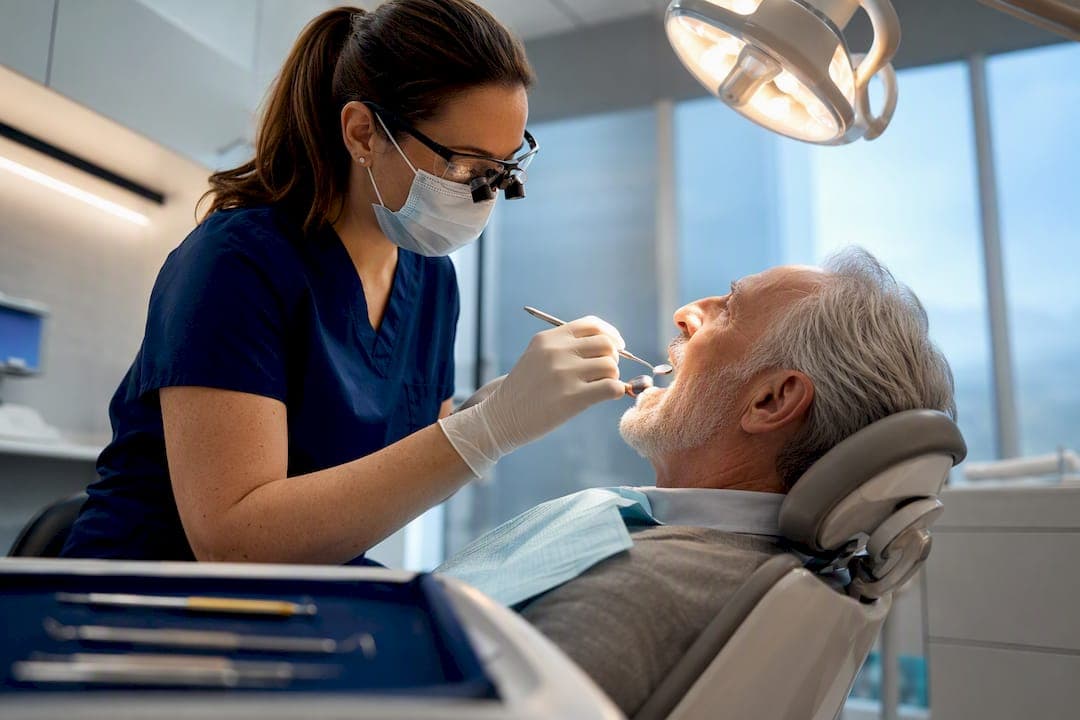
Original Medicare does not cover routine dental care. No cleanings, no fillings, no dentures, no implants, no extractions in the vast majority of cases. There are narrow exceptions when dental treatment is directly tied to another covered medical procedure, and most beneficiaries who want real dental protection get it through Medicare Advantage, a standalone dental plan, or Medicaid. CMS (Medicare.gov) is the authoritative source on where the exceptions apply.
TL;DR:
- Most Medicare beneficiaries cannot rely on Original Medicare for routine dental care, with coverage only available when dental work is directly linked to a covered medical procedure.
- Medicare may pay for dental services related to organ transplants, cancer treatment, or dialysis, but only with proper documentation from a Medicare-enrolled provider.
- The majority of beneficiaries instead turn to Medicare Advantage plans, private dental insurance, or Medicaid, depending on their specific needs and eligibility.
- Out-of-pocket costs vary widely, with preventive care often free but restorative procedures like crowns typically subject to coinsurance or caps, making prior planning essential.
- Verifying plan details and dentist participation beforehand is crucial, as coverage terms, limits, and provider networks can significantly affect affordability and access.
Table of Contents
- What counts as Medicare dental coverage under Original Medicare?
- How do beneficiaries actually get dental coverage?
- What will Medicare dental coverage actually cost you?
- How do you check a plan's dental benefits before you enroll?
- What if a Medicare dental claim gets denied?
- Why Medicare's dental gap frustrates more people than it should
- Getting help choosing dental coverage that fits your situation
- Where to verify Medicare dental policy and plan details
- Sources
What counts as Medicare dental coverage under Original Medicare?
The exclusion isn't an oversight. It's written into law. Section 1862(a)(12) of the Social Security Act bars Medicare from paying for dental services "in connection with the care, treatment, filling, removal, or replacement of teeth" unless that dental work is inextricably linked to a covered medical service. That phrase, "inextricably linked," is the whole ballgame. It means the dental treatment has to be clinically necessary for another Medicare-covered procedure to succeed, not just generally good for your health.
CMS has widened this lane in recent years. Under current guidance, Medicare may pay for dental services tied to organ transplant workups, cardiac valve replacement, head and neck cancer treatment, and dialysis-related care for patients with end-stage renal disease. A pre-transplant oral exam to rule out infection risk, for instance, can qualify. So can extractions needed before radiation therapy for oral cancer.
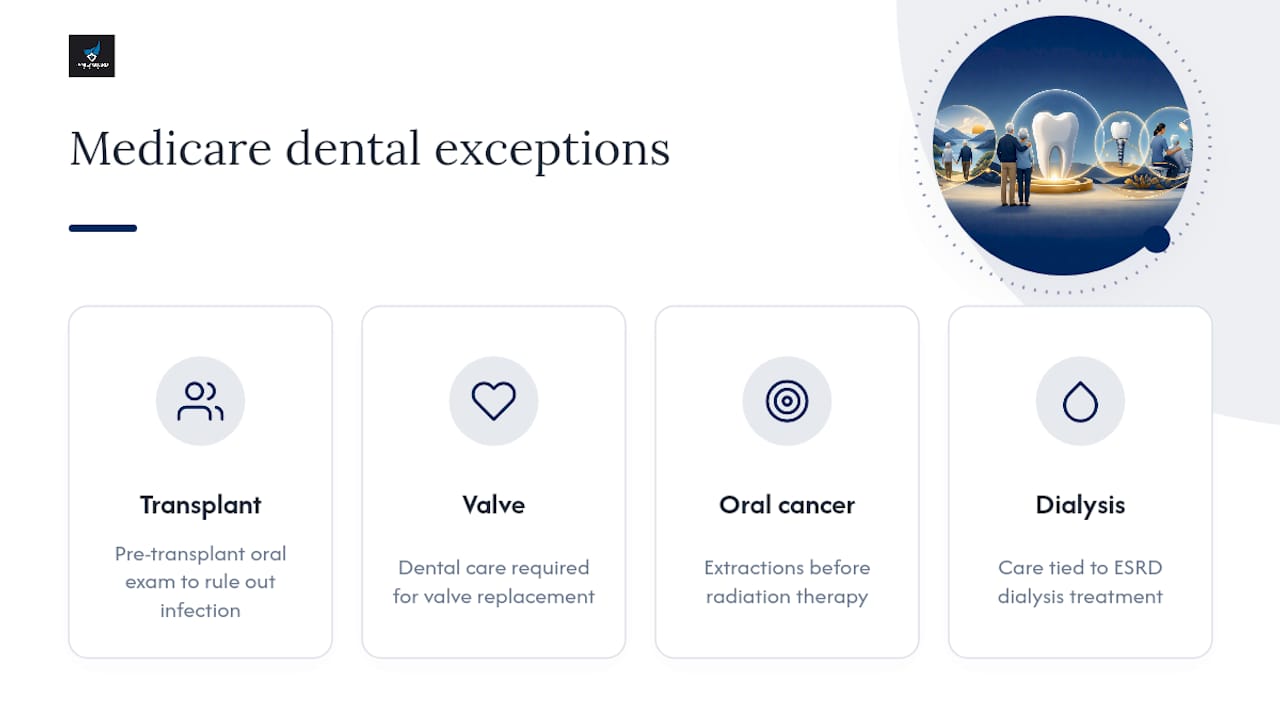
These services get billed and paid the same way other covered care does, through Part A in inpatient settings and Part B in outpatient settings, and only Medicare-enrolled providers can bill for them. That last detail trips people up constantly: your regular family dentist may not be enrolled in Medicare at all, since routine dentistry normally has no reason to be.
Documentation makes or breaks these claims. Your surgeon or specialist needs to state, in writing, why the dental work is required for the medical procedure to succeed. Without that paper trail, a legitimate exception can still get denied.
How do beneficiaries actually get dental coverage?
Since Original Medicare leaves routine dental care unpaid, most people who want coverage find it somewhere else. Roughly 47% of Medicare beneficiaries had no dental coverage at all as of 2019, according to KFF, which tells you how common the coverage gap really is. Here's where the rest find their options.
- Medicare Advantage (Part C): Most MA plans now bundle in some dental benefit, but scope varies enormously by plan — some cover cleanings and X-rays only, others add crowns and dentures with coinsurance.
- Standalone private dental insurance: PPO and HMO dental plans typically run $20 to $60 a month, often with a waiting period of six to twelve months before major work like crowns or root canals is covered.
- Discount dental plans: These aren't insurance. You pay an annual fee for reduced rates at participating dentists, with no claims process and no annual maximum to track.
- Medicaid for dual-eligibles: If you qualify for both Medicare and Medicaid, dental benefits depend entirely on your state. Some states cover only emergency extractions; others cover cleanings, dentures, and more.
- Employer or retiree plans and ACA marketplace add-ons: Some retirees keep employer dental coverage into retirement, and healthcare.gov also lists standalone dental plans in some states.
Think about what you actually need before you pick a lane. If you just want cleanings and X-rays covered, an MA plan with modest dental benefits might do the job. If you're staring down a crown or a full denture, run the math on a standalone plan's annual maximum first.
What will Medicare dental coverage actually cost you?
Cost is where plans quietly disappoint people. KFF's analysis found many Medicare Advantage plans cap dental benefits at about one thousand dollars a year, and that ceiling gets hit fast once real treatment starts.
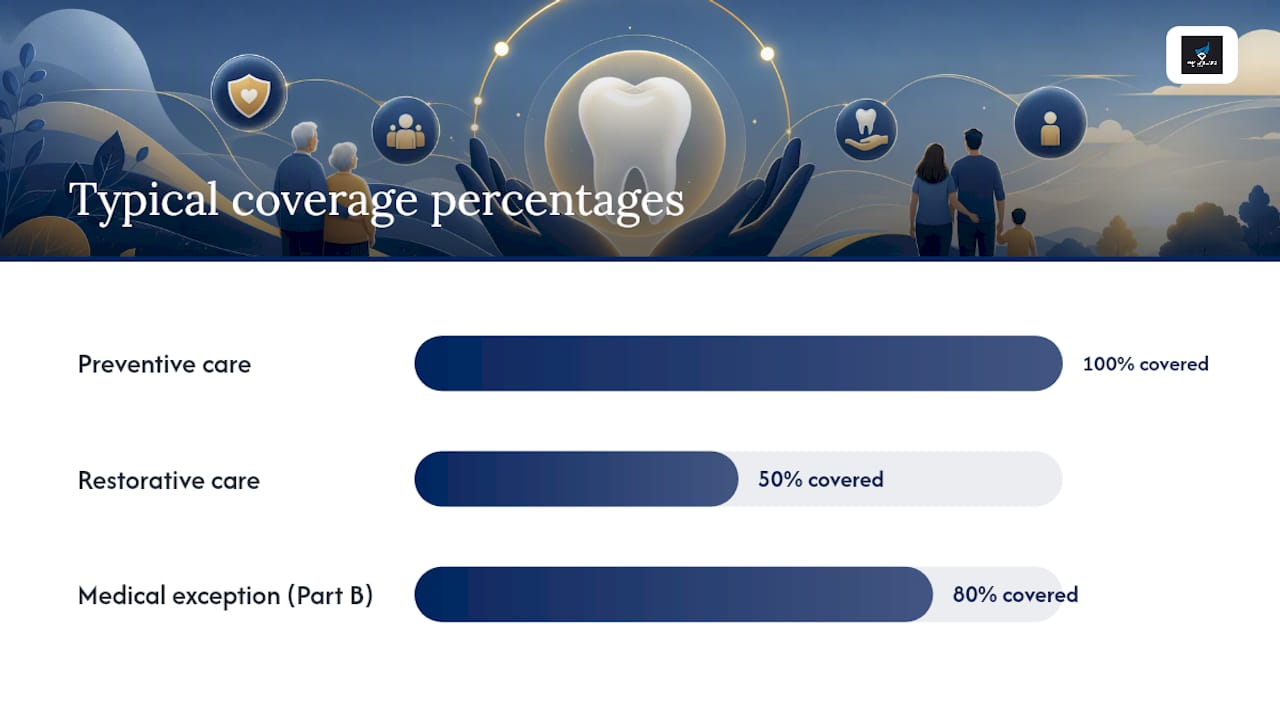
- Preventive care (cleanings, exams, X-rays): often covered at 100% or close to it under MA plans and most standalone dental policies.
- Restorative care (crowns, root canals, bridges): frequently subject to 50% coinsurance, meaning you cover half the bill yourself.
- Dentures and implants: commonly capped or excluded outright, even under plans that advertise dental benefits.
- Out-of-network care: can cost significantly more, or not be covered at all. So confirming your dentist is in-network before treatment matters as much as confirming coverage exists.
Pro Tip: A year of cleanings and X-rays might cost you nothing out of pocket. A year that includes one crown could burn through your entire annual dental cap in a single visit.
When dental care qualifies as a genuine medical exception under Original Medicare, standard Part A or Part B cost-sharing applies. That means deductibles and 20% Part B coinsurance, same as any other covered service.
How do you check a plan's dental benefits before you enroll?
Don't take a plan's marketing at face value. Every Medicare Advantage plan publishes a Summary of Benefits and an Evidence of Coverage document, and both spell out the real terms.
- Pull the plan's Evidence of Coverage and find the annual maximum, the covered services list, and any prior authorization requirements.
- Search Medicare.gov's Plan Finder or call the plan's customer service line to confirm your dentist participates in-network.
- Verify your dentist is Medicare-enrolled if you're pursuing a medical exception claim, not just accepting a private dental plan.
- Check enrollment timing. You generally need a valid enrollment period to switch Medicare Advantage plans or add coverage, and knowing your enrollment windows prevents missed deadlines.
- Bring your Medicare card, recent dental bills, your dentist's contact information, and a list of any procedures you're anticipating to the enrollment conversation.
What if a Medicare dental claim gets denied?
Formal referrals matter more than most people realize. Your medical specialist should send the dentist a written statement explaining exactly why the dental work supports a covered procedure, and that referral needs to travel with the claim, not sit in a file somewhere.
Strong claims include the referral letter, consult notes, and any lab results tying the dental work to the medical treatment. If a claim comes back denied, start by reading the Explanation of Benefits closely, then ask the treating provider for a more detailed medical necessity letter before filing an appeal with the plan or Medicare contractor. Confirm every provider involved is Medicare-enrolled before treatment begins. It's the detail that quietly sinks otherwise valid claims.
Why Medicare's dental gap frustrates more people than it should
The most misunderstood part of Medicare dental coverage isn't the exclusion itself. Most people eventually learn Original Medicare skips routine dental. What catches people off guard is how narrow the medical exceptions really are, and how much paperwork stands between a legitimate case and an actual payment.
I've seen the assumption trip people up in both directions. Some beneficiaries assume any dental work connected to a hospital stay will get covered automatically, then get blind sided by a denial because no one documented the clinical link in writing. Others assume Medicare Advantage dental benefits work like real dental insurance, only to discover a $1,300 annual cap disappears after one crown.
The honest fix isn't waiting for Congress to add a dental benefit to Part B, a debate that advocacy groups have been having for years without resolution. It's treating dental coverage as its own decision, separate from your medical Medicare choice, and matching the plan to what your mouth actually needs, not what sounds comprehensive in a brochure. Preventive-only coverage is fine for some people. It's a bad bet for anyone who already knows a crown or denture is coming.
— Shereka
Getting help choosing dental coverage that fits your situation
Comparing Medicare Advantage dental riders against standalone plans takes more than reading a brochure, and licensed agents at Family Guard Life and Health walk through Evidence of Coverage documents and network details with clients across 22 states every day. That review often catches the annual caps and coinsurance terms that plan marketing glosses over.

If you're weighing options, a consultation is a practical next step. Bring your Medicare card, any recent dental bills, your current dentist's contact information, and a short list of procedures you expect to need. Family Guard Life and Health will walk through Medicare Advantage dental benefits, standalone plans, and how they stack up against your specific situation. Visit Family Guard Life and Health to schedule a call and get a clear answer before you commit to a plan.
For readers estimating what an uncovered procedure might cost out of pocket, this breakdown of dental implant costs is a useful starting point for budgeting.
Where to verify Medicare dental policy and plan details
- Medicare.gov publishes the official coverage rules for dental services, including current exception categories.
- CMS.gov hosts the regulatory text and provider billing guidance behind the dental exclusion and its exceptions.
- KFF offers an independent analysis of Medicare Advantage dental benefit variability and coverage gaps.
- AARP summarizes health risks tied to untreated dental disease in older adults and recent policy expansions.
- Medicaid.gov and healthcare.gov list state-specific Medicaid dental benefits and marketplace dental plan options for your state.
Use CMS for policy language, Medicare.gov to search specific plans, your state's Medicaid site for dual-eligible benefits, and KFF or AARP when you want independent analysis rather than a plan's own marketing.
Sources
- Medicare
- Medicare Dental Coverage — CMS
- Medicare and dental coverage: a closer look — Kaiser Family Foundation (KFF)
- Does Medicare cover dental care? — AARP
- Fact Sheet | FAQ: Adding a Dental Benefit to Medicare Part B — Center for Medicare Advocacy