
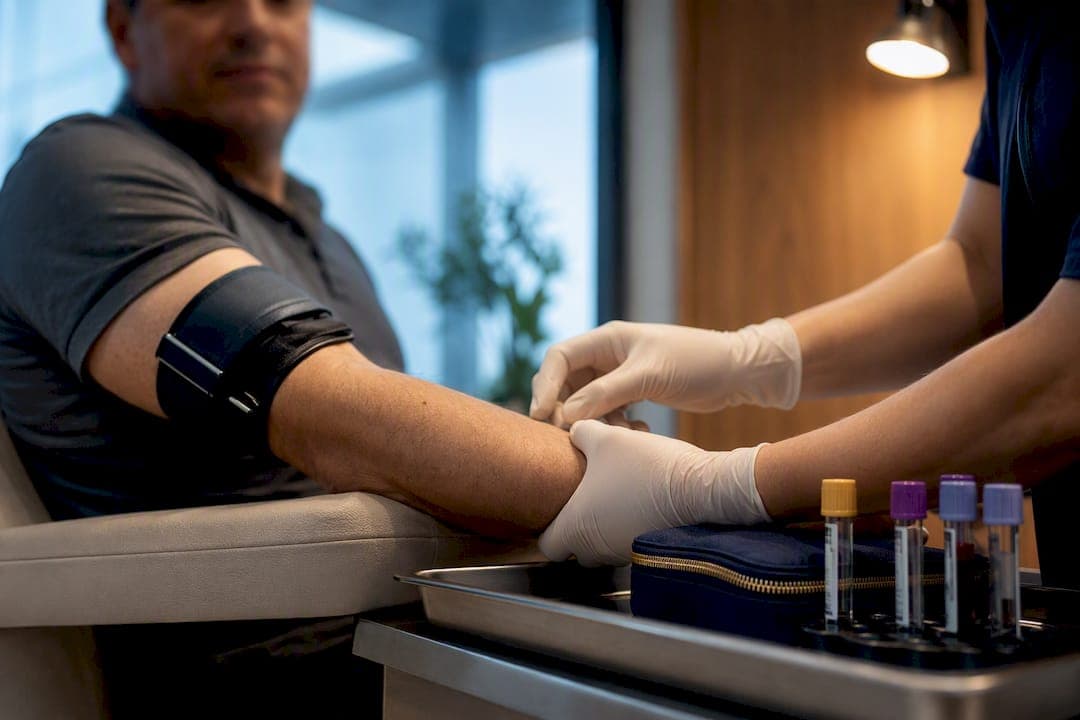
A life insurance medical exam is a short, insurer-paid health check that helps underwriters decide your eligibility and premium class. It usually takes 30 to 45 minutes and combines a health questionnaire with basic vitals, blood work, and a urine sample. Your results don't produce a pass or fail grade. They shape which rate class you land in and whether the policy gets approved at all.
TL;DR:
- Larger coverage amounts, especially for permanent policies and older applicants, almost always require a full medical exam, while some younger, healthy applicants may qualify without one through accelerated underwriting.
- Blood tests analyzing cholesterol, blood sugar, and liver or kidney markers, along with nicotine detection, heavily influence premium rates and can shift applicants into higher or lower rate classes.
- Proper preparation, such as avoiding alcohol, nicotine, and heavy exercise for 12 to 48 hours before the exam, improves the chances of achieving stable and favorable results.
- No-exam options like simplified or guaranteed issue policies are available but generally come with lower coverage limits and higher premiums, which may be suitable for urgent needs or health issues.
- Results are usually reviewed within 3 to 5 business days, and having a licensed agent assist with unexpected results can help determine if retesting or shopping for better underwriting terms is advisable.
Table of Contents
- Why Do Insurers Require a Life Insurance Medical Exam?
- What Happens During a Life Insurance Medical Exam?
- What Labs and Readings Actually Affect Your Rate?
- How Should You Prepare for a Life Insurance Medical Exam?
- Can You Skip the Medical Exam Entirely?
- What Happens After Your Life Insurance Medical Exam?
- When Should You Call a Licensed Agent About Your Exam Results?
- How Family Guard Life and Health Helps You Navigate Underwriting
- Sources
Why Do Insurers Require a Life Insurance Medical Exam?
Underwriters need objective data to price risk accurately, and self-reported health history only goes so far. The exam fills in the gaps with bloodwork, vitals, and a physical snapshot that either confirms or contradicts what you wrote on your application.
Not every policy requires one. Insurers commonly require a medical exam for coverage above roughly $250,000, though the exact threshold shifts by insurer and applicant age. Younger applicants in good health sometimes qualify for higher limits without ever seeing a paramedical examiner, thanks to accelerated underwriting programs that lean on other data sources instead.
A few patterns show up again and again:
- Larger face amounts almost always trigger a full exam, since more money is at stake for the carrier.
- Permanent policies like whole life or indexed universal life tend to require exams more often than smaller term policies.
- Older applicants face exams more frequently, even at lower coverage amounts.
A licensed paramedical professional, not your personal doctor, conducts the exam. It typically happens at your home, your workplace, or a nearby clinic, scheduled at your convenience. The insurer covers the entire cost. You'll never see a bill for it.
What Happens During a Life Insurance Medical Exam?
Most exams follow a consistent sequence, and knowing the order ahead of time takes a lot of the mystery out of it.
- Identity verification and paperwork. The examiner confirms your identity with a photo ID and reviews consent forms authorizing the insurer to collect and use your results.
- The health questionnaire. You'll answer detailed questions about personal and family medical history, current medications, past surgeries, and lifestyle habits like smoking or alcohol use. Answers here get cross-checked against your lab results, so consistency matters.
- Vitals check. The examiner records your height, weight, and blood pressure, then calculates your body mass index on the spot.
- Blood draw. Expect two to three vials drawn from your arm, screened for a wide range of markers covered in the next section.
- Urine sample. This checks for nicotine, drugs, and signs of kidney or metabolic issues that bloodwork alone might miss.
- Possible extras. Depending on your age or the coverage amount you're requesting, you may also get an EKG or a brief cognitive and mobility screening. Older applicants and high-coverage applications often see additional testing like this.
The whole appointment usually wraps up in 30 to 45 minutes. Fasting isn't always required, but if your insurer wants an accurate glucose or cholesterol reading, the examiner will tell you in advance so you can plan around it.
What Labs and Readings Actually Affect Your Rate?
The results that move the needle most on pricing usually come down to a handful of biomarkers underwriters watch closely.
- Lipid panel and cholesterol. High LDL or triglycerides can push you into a lower rate class, even without a diagnosed condition.
- Fasting glucose and HbA1c. Elevated readings raise flags for prediabetes or diabetes, which almost always affects pricing.
- Liver and kidney markers. Abnormal liver enzymes or creatinine levels can signal anything from heavy alcohol use to undiagnosed disease, prompting further review.
- Nicotine and cotinine. These detect tobacco use regardless of what you wrote on the application, and a positive result can double your premium or shift you to a smoker rate.
- Drug screening. Standard panels check for controlled substances; marijuana results get handled differently depending on the insurer's state-specific policies and whether use is medical or recreational.
- PSA, HIV, and hepatitis panels. These are more common for older applicants or higher coverage amounts and can trigger requests for additional records if results come back abnormal.
- Blood pressure and BMI. Both feed directly into rate class calculations, often more heavily than applicants expect.
Bloodwork results typically reach the insurer within 3 to 5 business days, though the full underwriting decision can take longer once an underwriter reviews everything together.
Pro Tip: A single abnormal reading rarely sinks an application by itself. Underwriters usually look at the whole picture, so one borderline number often gets weighed against everything else on file.
How Should You Prepare for a Life Insurance Medical Exam?
Most people don't fail an exam because of a real health problem. They get flagged because of something temporary that skewed a reading. That distinction is worth understanding before you schedule anything.
The week before:
- Cut back on alcohol, since it can elevate liver enzymes and triglycerides for several days afterward.
- Stick to your normal diet rather than crash dieting, which can temporarily distort glucose and lipid numbers.
24 to 48 hours before:
- Skip alcohol entirely.
- Avoid high-sodium and high-fat meals, which can spike blood pressure and cholesterol readings.
- Hold off on strenuous exercise, since intense workouts can temporarily raise blood pressure and certain enzyme levels.
12 to 24 hours before:
- Avoid nicotine in any form, including vaping, since cotinine stays detectable in urine for days.
- Limit caffeine the morning of the exam if your blood pressure tends to run high.
- Follow any fasting instructions the examiner gave you, and drink plenty of water otherwise.
Simple steps like hydrating and avoiding alcohol, nicotine, and heavy exercise beforehand genuinely help stabilize the numbers that matter most.
Day of the exam: have your ID and a list of current medications ready, wear comfortable clothing that allows easy access to your arm, and arrive calm rather than rushed. Staying hydrated in the hours before also makes the blood draw itself go faster and easier.

Pro Tip: If fasting is required, schedule your exam for early morning. You'll avoid a full day of hunger, and morning readings tend to be more stable anyway.
Can You Skip the Medical Exam Entirely?
Yes, in some cases. Three main paths let applicants avoid a traditional exam altogether, each with its own tradeoffs.
- Accelerated underwriting uses prescription history, motor vehicle records, and databases like MIB instead of lab work. It's typically reserved for healthy applicants under a certain age requesting moderate coverage amounts.
- Simplified issue skips the exam and relies entirely on health questions, but usually caps coverage lower and charges higher premiums than fully underwritten policies.
- Guaranteed issue asks no health questions at all, making it useful for older applicants or those with serious conditions, though coverage limits are modest and premiums run high relative to the payout, often used for final expense insurance.
No-exam options exist across all three categories, but the tradeoff is consistent: less hassle up front, more cost over time. Applicants seeking the highest coverage amounts usually still need lab testing, since insurers want firmer data before taking on that much risk. A free calculator can help you see whether your target coverage amount is likely to require full underwriting before you commit to either path.
If your health history is complicated or you're chasing the lowest possible rate, full underwriting with an exam is usually worth the wait. If you need coverage fast and can accept a smaller policy or higher premium, no-exam options solve that problem quickly.
What Happens After Your Life Insurance Medical Exam?
- Lab processing. Results typically reach the underwriter within 3 to 5 business days, though EKGs or cognitive screenings can add a few extra days for review.
- Underwriting review. An underwriter, not the examiner, evaluates your full file, including the questionnaire, lab results, and any medical records pulled from your physician, then assigns a rate class.
- Rate class assignment. This determines your final premium. Findings that concern underwriters, like an elevated liver enzyme or high blood pressure, can shift you into a higher rate class such as a table rating rather than outright denial.
- Requesting your records. You have the right to request a copy of your exam results in writing, and most insurers will provide them along with retesting options if you believe there's an error.
- Disputing a result. If a reading looks wrong, contact your doctor for a follow-up test and loop in your agent, who can request a retest or submit updated records to the underwriter on your behalf.
Keep in mind that the examiner who drew your blood isn't your treating physician. They're collecting data for the underwriter, not diagnosing anything, so any concerning finding deserves a real follow-up with your own doctor.
When Should You Call a Licensed Agent About Your Exam Results?
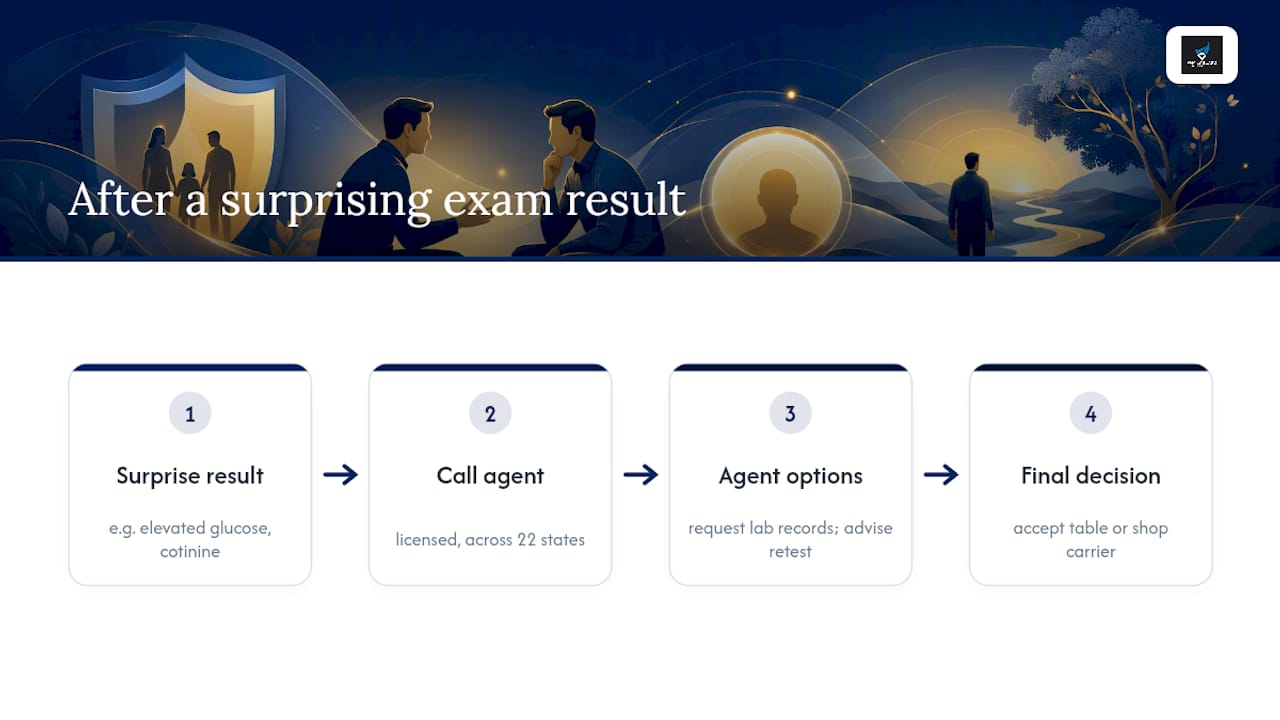
Most people don't need an agent to walk them through a clean exam. But when results come back with a surprise, an elevated glucose reading, an unexpected liver enzyme flag, a cotinine hit from vaping, that's exactly when having someone on your side pays off.
An agent can request your lab records directly from the insurer, advise you on whether a retest makes sense, or help you decide if a table rating is worth accepting versus shopping a different carrier with more favorable underwriting guidelines. This matters most for applicants with a complicated medical history or those applying for larger coverage amounts, where one borderline number can swing the outcome significantly. Licensed professionals across 22 states have seen enough of these cases to know which ones are worth fighting and which ones simply need patience.
How Family Guard Life and Health Helps You Navigate Underwriting
Family Guard Life and Health is a different route than going it alone through underwriting. Instead of guessing whether a lab flag will tank your rate or wondering if a no-exam policy fits your situation, you get a licensed agent who reviews your options across health insurance, life insurance, annuities, Medicare supplements, dental, vision, and retirement income planning, and tells you plainly what fits.

An independent insurance agency serves individuals across multiple states, helping people prepare for exams, request records after the fact, and weigh accelerated underwriting or simplified issue against full underwriting when a faster decision matters more than the lowest possible premium. If you're staring down an exam and want someone to explain what your results actually mean for your rate, get in touch with Family Guard Life and Health to talk through your options before you schedule anything.
This article is general information, not a substitute for advice from a qualified financial advisor. Consult a qualified financial professional about your own circumstances before acting on anything here.
Sources
- Life insurance medical exam — MoneyGeek
- Getting a life insurance exam: What to expect and how to prepare — Guardian Life
- What to expect in a life insurance medical exam — F.A. Peabody Insurance