

Original Medicare generally won't pay for routine dental care, so never assume a cleaning or a crown is covered just because you have Part A and Part B. Start by checking whether a Medicare Advantage plan with dental benefits fits your area and your dentist, then compare that against a stand-alone dental plan or a discount dental plan. Before signing anything, read the Evidence of Coverage for network rules, annual maximums, waiting periods, and what you'll actually pay out of pocket.
TL;DR:
- Medicare Advantage plans are the most common choice, but coverage varies significantly by county and plan, so verify what dental services are included before enrolling.
- Stand-alone dental plans offer predictable coverage levels with tiered reimbursements but often have waiting periods and annual maximums around 1,000 to 2,500 dollars.
- Original Medicare does not cover routine dental care, except in rare cases where dental work is medically necessary alongside other covered procedures.
- The true cost of dental coverage involves premiums, annual maximums, waiting periods, and out-of-pocket expenses, making plan choice highly dependent on your dental history and upcoming procedures.
- An independent insurance agent can help evaluate plan details, confirm in-network providers, and identify clauses like missing-tooth exclusions that can otherwise lead to unexpected costs.
Table of Contents
- Dental Insurance for Seniors: Comparing Your Real Options
- What Original Medicare Actually Covers
- Real Costs: Premiums, Maximums, and Waiting Periods
- How to Choose a Dental Plan: A Practical Checklist
- Why an Independent Agent's Review Matters
- Buy Coverage or Save on Your Own?
- Get Help Comparing Dental Plans
- Sources
- FAQ
Dental Insurance for Seniors: Comparing Your Real Options
Most seniors choosing dental coverage land on one of four paths, and each one trades cost for flexibility differently.
Medicare Advantage dental benefits are the most common route right now. Nearly all Medicare Advantage plans include some dental benefit, and some carriers offer $0-premium plans that bundle dental with medical coverage. The catch is variability: one plan's "dental benefit" might mean a free cleaning and X-ray, while another covers crowns and dentures with a real annual allowance. Plan availability depends heavily on your county, so the same insurer can offer very different dental riders two counties apart.
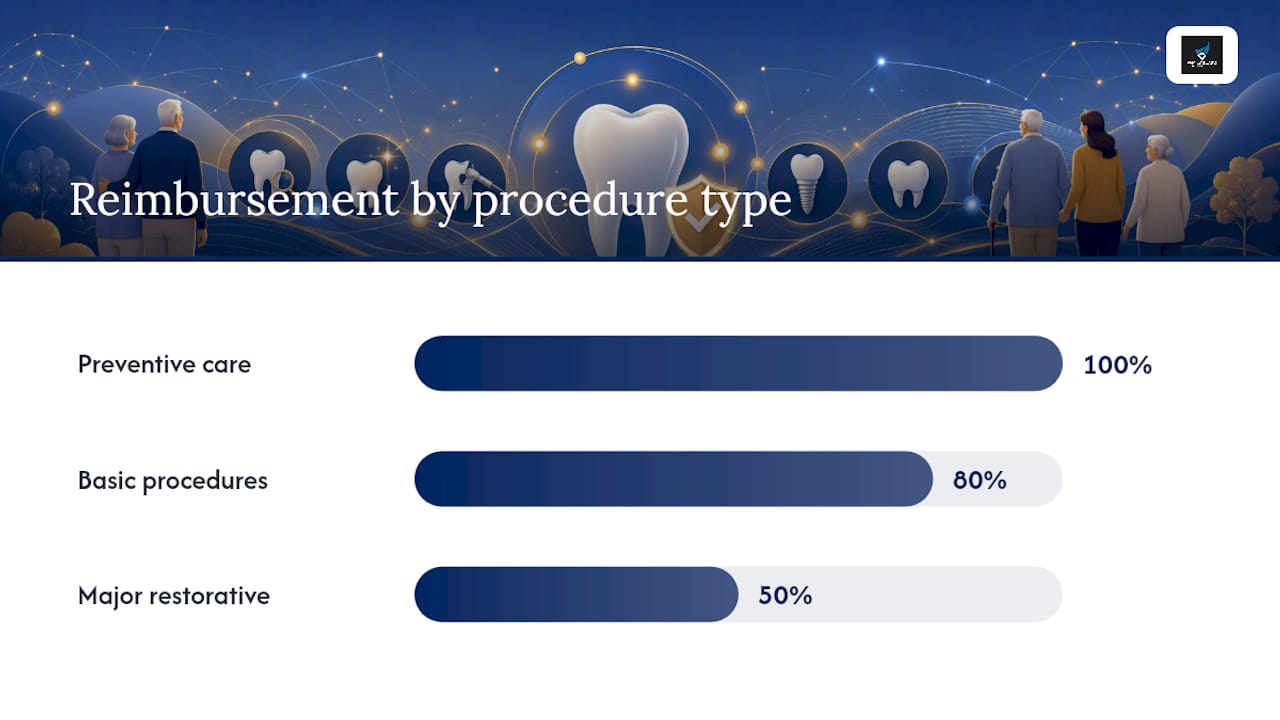
Stand-alone dental plans work independently of your medical coverage and typically use tiered reimbursement: preventive care at or near 100%, basic procedures around 80%, and major restorative work closer to 50%, per NADP's plan breakdowns. These suit people who want predictable coverage regardless of which medical plan they carry.
Dental discount plans aren't insurance at all. They make sense if you need one or two procedures soon and don't want to wait out a waiting period.
Other paths worth checking:
- Medicaid adult dental benefits, which vary sharply by state
- PACE (Program of All-Inclusive Care for the Elderly) for qualifying enrollees
- PACE (Program of All-Inclusive Care for the Elderly) for qualifying enrollees
- Federally qualified health centers and dental school clinics for reduced-fee care
What Original Medicare Actually Covers
Original Medicare's dental exclusion is one of the most misunderstood rules in the whole system. Medicare Part A and Part B do not cover routine dental services like cleanings, fillings, extractions, or dentures. That's the official rule, not a gray area open to interpretation.
The exceptions are narrow. Medicare may pay for dental work only when it's medically necessary alongside a covered procedure, such as an oral exam before a heart valve replacement or extractions required to treat a jaw fracture during a covered hospital stay. Routine checkups don't qualify, no matter how you frame the visit.
If you're relying on Original Medicare alone, verify your specific situation against the plan brochure or Evidence of Coverage rather than a general summary. CMS's own data on dental utilization confirms how few beneficiaries get dental services paid through Original Medicare, which is exactly why Medicare Advantage and stand-alone plans exist to fill that gap.
Real Costs: Premiums, Maximums, and Waiting Periods
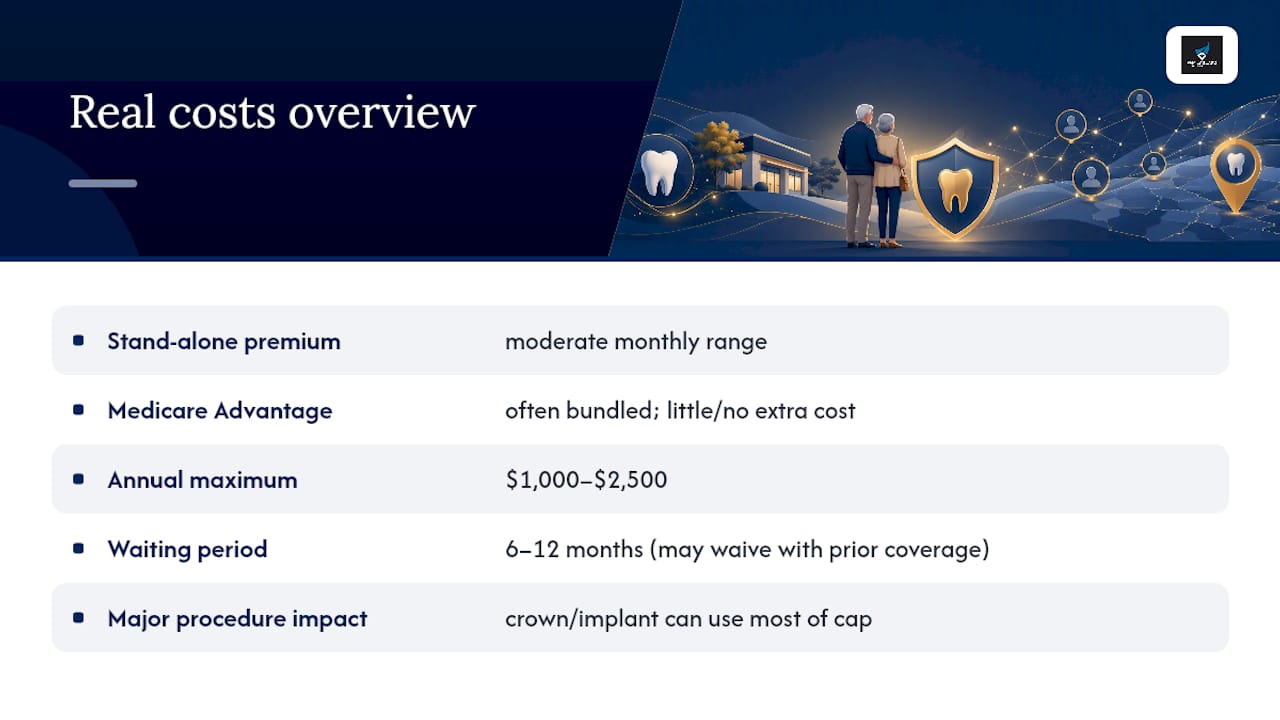
Stand-alone dental premiums for seniors commonly run in a moderate monthly range, though the number swings with your coverage tier and location. If you're already paying a Medicare Advantage premium, adding dental usually costs little to nothing extra since many MA plans bundle it in.
The number that actually decides value is the annual maximum. Annual dental benefit caps commonly fall between roughly $1,000 and $2,500, and a single crown or root canal can burn through most of that in one visit.
By the numbers: A typical annual dental maximum sits in the $1,000 to $2,500 range. One major procedure, like a crown or implant, can consume most of that cap in a single visit.
Waiting periods add another layer. Many stand-alone plans delay coverage for major services (six to twelve months isn't unusual), though some waive the wait if you show proof of prior continuous dental coverage. Copays, coinsurance, and out-of-network penalties stack on top of all this, so two plans with identical premiums can produce very different total bills once you factor in where you actually get treated.
How to Choose a Dental Plan: A Practical Checklist
Start with your own mouth, not the brochure. If you have crowns, bridges, gum disease history, or you know a major procedure is coming, that changes which plan actually pays off.
- Pull your recent dental history. Note existing restorative work and anything your dentist has flagged as likely needed soon.
- Request the Evidence of Coverage, not just the marketing sheet, and check: covered services list, annual maximum, waiting periods, coverage tiers, and pre-authorization rules.
- Call your dentist's office directly to confirm they're in-network for the specific plan you're considering, not just "accept Medicare."
- Get a written cost estimate from your dentist for any planned work, then run that estimate against each plan's reimbursement tiers.
- Compare total annual cost scenarios, not just premiums, factoring in your annual maximum against your expected procedures.
Pro Tip: Ask the insurer directly whether your plan has a "missing-tooth clause." Some plans deny coverage for replacing a tooth that was already missing before your policy started, even years later.
Watch for red flags: vague EOC language that doesn't spell out exclusions, no published network directory, a low annual maximum paired with a high premium, or waiting periods stretching past a year for major work. Any of those should make you look elsewhere. The missing-tooth clause trap catches more seniors than any other single exclusion, largely because it's buried in policy language most people never read.
Why an Independent Agent's Review Matters
Shereka is a licensed insurance agent working across 22 states, with hands-on experience placing Medicare, dental, vision, and supplemental policies for retirees. That licensing matters here because dental plan language is dense, and a misread clause can cost you thousands at the exact moment you need coverage.
An independent agent reads the Evidence of Coverage line by line, confirms your dentist is actually in-network (not just "accepting new patients" in general), times your enrollment to avoid coverage gaps, and checks for missing-tooth clauses or waiting-period waivers tied to prior coverage. For a deeper look at how Medicare and dental benefits interact, Family Guard's guide on when Medicare actually pays for dental work breaks down the exceptions in more detail.
Buy Coverage or Save on Your Own?
Insurance usually pays for itself if you expect major restorative work soon or have a history of costly dental problems. Seniors with strong preventive habits and no major work on the horizon sometimes come out ahead self-funding, but that leaves you exposed if a crown or implant shows up unannounced. If money is tight, look at Medicaid eligibility, PACE, community health centers, or dental school clinics before writing off coverage altogether.
— Shereka
Get Help Comparing Dental Plans
An independent broker licensed in multiple states can provide recommendations by comparing plans across carriers, rather than pushing one insurer's product. That independence matters most in dental coverage, where the difference between a plan with a real annual maximum and one that looks cheap but caps out fast isn't obvious from a brochure.

A consultation includes a full Evidence of Coverage review, a check on whether your current dentist participates in the network, a side-by-side cost scenario comparison, and help getting enrolled without gaps. Bring your recent dental records, a list of any planned procedures, and your current Medicare card if you have one. Visit the dental and vision coverage page to start comparing options, or explore Medicare supplement and health plan options if you need broader coverage guidance alongside dental.
This article is general information, not a substitute for advice from a qualified doctor. Consult a qualified healthcare professional about your own circumstances before acting on anything here.
Sources
- NerdWallet — Best Medicare dental plans
- NADP — Understanding dental benefits
- KFF — Medicare and dental coverage: a closer look
FAQ
What is the best dental plan for seniors?
There's no single best plan. The right choice depends on whether you already have Medicare Advantage with dental benefits, whether you need major restorative work soon, and what your dentist accepts. Compare a Medicare Advantage dental rider against a stand-alone plan using your actual dental history before deciding.
How much does dental coverage typically cost for seniors?
Stand-alone dental premiums vary by coverage tier and location, and Family Guard doesn't publish a flat rate since pricing depends on your specific plan and state. Current pricing for dental and vision coverage is available directly through Family Guard's dental and vision page.
Is it worth it for seniors to get dental insurance?
It's usually worth it if you expect a crown, bridge, or other major work in the next year or two, since annual maximums often run $1,000 to $2,500 and one procedure can use most of that. If you have excellent oral health and no anticipated work, self-funding preventive visits can sometimes make more sense.
What do most retirees do for dental insurance?
Most retirees either pick a Medicare Advantage plan that bundles dental benefits with medical coverage, or they add a stand-alone dental policy alongside Original Medicare. Nearly all Medicare Advantage plans now include some dental benefit, which is why it's become the default starting point for many retirees comparing coverage.