

An accelerated death benefit lets a life insurance policyowner claim part of the death benefit early, usually after a terminal, chronic, or critical illness diagnosis. It puts cash in hand for treatment, care, or bills right now, but it permanently shrinks what your beneficiaries collect later. Most people use it for terminal illness. Fewer realize chronic and critical illness triggers exist too.
TL;DR:
- Qualification criteria vary: terminal illness usually requires a diagnosis of death within one year, while chronic and critical illnesses depend on specific activity impairments or condition lists that differ by insurer.
- The payout reduces the remaining death benefit dollar for dollar, often with an actuarial discount, administrative fees, or interest, which may lower the actual amount received.
- Most payouts for terminal illness are tax-free, but installment payments or those with interest components can have taxable portions, and large lump sums might impact Medicaid or SSI eligibility.
- Filing a claim involves medical certification from a licensed physician, supporting documentation, and typically completes within 30 to 60 days, with delays often caused by unclear documentation or prognosis details.
Table of Contents
- How an Accelerated Death Benefit Actually Works
- Who Qualifies: Terminal, Critical, and Chronic Illness Triggers
- How Much You Can Get and What It Costs
- Are Accelerated Death Benefits Taxable?
- Weighing the Pros and Cons Before You File
- Filing a Claim: Steps and Realistic Timelines
- Alternatives Worth Considering Alongside an ADB
- What Agents See Go Wrong (And How to Avoid It)
- An insurance agency can review your policy before you file
- Where to Go for More on Accelerated Benefits
- Sources
How an Accelerated Death Benefit Actually Works
Some policies build the accelerated death benefit (ADB) right into the contract. Others attach it as a rider, listed in a separate section of your policy documents with its own definitions and payout rules. Either way, you can't just call and ask for money. A licensed health care provider has to certify the qualifying condition, usually with medical records and a written prognosis.
Once approved, insurers typically pay either a lump sum (common for terminal illness) or installments (more common for chronic illness claims tied to ongoing care needs). The insurer calculates the accelerated payment as a portion of the face amount, then subtracts that same amount, plus any administrative charges or interest, from what's left for your beneficiaries.
Key mechanics to know:
- Rider terms live in a separate policy addendum, not the base contract
- Certification must come from a licensed physician, not a self-report
- Lump sums suit one-time needs; installments suit ongoing chronic care
- The payout reduces your remaining death benefit dollar for dollar, plus fees
Pro Tip: Ask your insurer for the exact reduction formula in writing before you file. Some carriers discount the payout below face value, so the number you're quoted may not be the number you actually receive.
Who Qualifies: Terminal, Critical, and Chronic Illness Triggers
Not every diagnosis unlocks the benefit, and policy language varies more than most people expect. Here's how the three main categories typically break down:
- Terminal illness. Most policies define this as a prognosis of death within about one year, though some set the window somewhat shorter or longer.
- Critical illness. This category often covers named events like heart attack, stroke, major organ transplant, or invasive cancer, but the list of covered conditions differs from insurer to insurer.
- Chronic illness. This tier usually requires an inability to perform two or more activities of daily living (ADLs), such as bathing or eating, or documented cognitive impairment.
Because these definitions aren't standardized across the industry, the safest move is reading your actual policy language and calling your agent before assuming coverage applies. A diagnosis that qualifies under one carrier's terminal illness clause might not meet another's timeline requirement at all.
How Much You Can Get and What It Costs

Most policies cap the accelerated portion somewhere between 25% and 100% of the face amount, though the exact limit is set in your contract, not by any industry standard. A $250,000 policy with a 50% cap means you could access up to $125,000 while alive, leaving $125,000 minus any fees for beneficiaries.
What affects your net payout:
- Insurers often apply an actuarial discount to lump-sum offers, since they're paying money earlier than expected
- Some riders come at no added premium cost; others raise your monthly premium meaningfully
- For permanent policies, existing loans or reduced cash value can shrink the accelerated amount further
- Future premiums may still be owed on the unaccelerated portion of the policy
The trade-off is straightforward even if the math isn't: approved payments are deducted permanently from the death benefit, and that reduction doesn't reverse if your health improves.
Are Accelerated Death Benefits Taxable?
Under IRS guidance, accelerated death benefits paid to a terminally ill insured are generally free of income tax. That's the good news for most claimants filing under a terminal illness trigger.
Where it gets complicated:
- Structured or installment payouts that include interest components can create a taxable portion
- Chronic illness payments sometimes carry different tax treatment than terminal illness payments, depending on how the policy and IRS per diem limits interact
- A lump sum can push your countable assets over the limit for Medicaid or SSI eligibility, even though the money itself isn't taxed as income
Pro Tip: If you or a family member receives means-tested benefits, talk to a benefits specialist before the claim funds arrive, not after. Spending down or restructuring the payout timing can sometimes preserve eligibility.
Weighing the Pros and Cons Before You File
The upside is real: immediate cash for treatment, caregiving, medical debt, or simply a better quality of life while you can still enjoy it. The downside is just as real: every dollar taken now is a dollar your beneficiaries won't see.
Before deciding, run through this checklist:
- How urgent is the financial need, and are there other funding sources available first?
- Would a partial acceleration cover the need while preserving more for heirs?
- Does your policy's chronic illness definition actually match your diagnosis?
- Have you checked how the payout affects taxes or means-tested benefits?
- Have you confirmed remaining premiums are still affordable after acceleration?
Filing a Claim: Steps and Realistic Timelines
Start by calling your insurer and your agent together, ideally in the same conversation, so nothing gets lost in translation between the two.
- Request the accelerated benefit claim forms directly from the insurer.
- Get physician certification addressing your policy's specific timeline language (not just a general diagnosis letter).
- Gather supporting documentation: medical records, prognosis letters, government ID, and your policy number.
- Submit the complete packet and ask the insurer directly about payout structure, remaining death benefit, and any fees.
- Follow up in writing if you haven't heard back within the expected review window.
Claims with complete documentation typically process in 30 to 60 days. Missing prognosis details or unclear ADL documentation are the most common causes of delay or denial.
Pro Tip: Pre-submit your evidence packet, including the prognosis letter, before the formal claim form if your insurer allows it. It often shortens the underwriting review since the file arrives complete instead of piecemeal.
Alternatives Worth Considering Alongside an ADB
Accelerating your death benefit isn't the only way to free up cash during a health crisis, and it isn't always the best first move.
- Long-term care riders often pay monthly indemnity benefits and can be used repeatedly, unlike a one-time ADB payout, which better fits ongoing care needs.
- Policy loans or withdrawals against cash value in a permanent policy tap your own equity, but accrue interest and still reduce what beneficiaries eventually receive.
- Retirement assets or annuity withdrawals may cover the same need with different tax consequences and no effect on your death benefit at all.
- Estate and legacy planning strategies from a firm like EliteLegacyPlanning can help you weigh hybrid LTC and life insurance approaches before committing to any single option.
Combining two smaller solutions, a partial acceleration plus a policy loan, sometimes preserves more for heirs than draining one benefit fully.
What Agents See Go Wrong (And How to Avoid It)
The biggest mistake clients make is assuming "terminal illness" means the same thing across every insurer. It doesn't. One carrier's 12-month prognosis clause can disqualify a diagnosis that another carrier's 24-month window would approve without question.
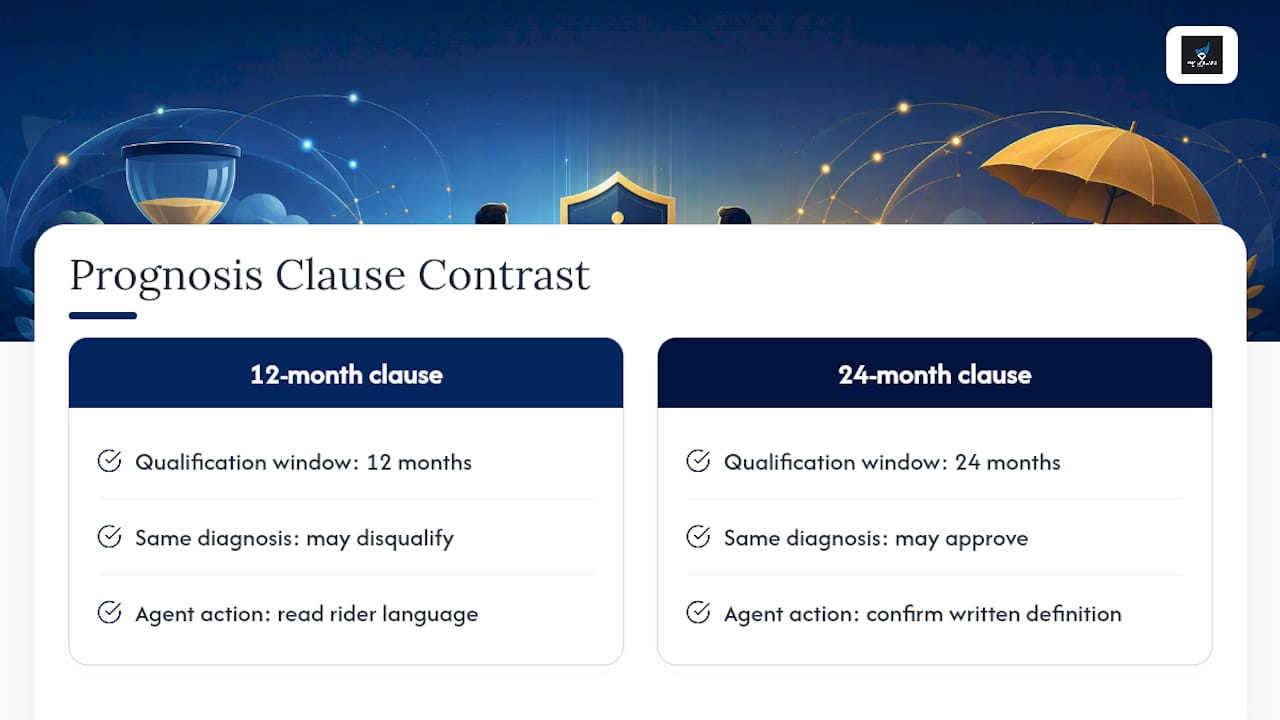
The second mistake is treating chronic illness riders as interchangeable with terminal illness riders. They're triggered differently, paid differently, and taxed differently in some cases. Clients also underestimate how much a permanent reduction in death benefit matters until they see the number in writing.
My practical advice: before you assume your policy will bail you out during a crisis, get someone to read the actual rider language with you. Watch for vague claims-handling timelines in the contract and ask directly whether your specific diagnosis matches the policy's written definition, not just its general category.
— Shereka
An insurance agency can review your policy before you file
If you're staring down a diagnosis and wondering whether your policy actually helps, a qualified reviewer can check the fine print with you instead of leaving you to decode rider language alone. That means a real check of whether your policy has an accelerated benefit rider, an estimate of your likely net payout after fees, and a flag for any tax or Medicaid/SSI concerns before you file.

Beyond the review, a knowledgeable service can help assemble the paperwork, from prognosis letters to documentation checklists, and follow up with the insurer so a claim doesn't stall over a missing form. If retirement income planning or a related policy adjustment comes up during that review, it can get handled in the same conversation. Schedule a policy review with an appropriate agency to find out exactly what your policy allows before a health crisis forces the question.
Where to Go for More on Accelerated Benefits
- IRS FAQs on life insurance proceeds
- Alabama Department of Insurance: accelerated benefits Q&A
- Life insurance for cancer survivors
- Final expense insurance sizing guide
This article is general information, not a substitute for advice from a qualified financial advisor. Consult a qualified financial professional about your own circumstances before acting on anything here.
Sources
- What Is An Accelerated Death Benefit & How Does It Work? – Forbes Advisor
- Life insurance & disability insurance proceeds — IRS FAQs
- What are living benefits in a life insurance policy? — MassMutual blog