

A cancer insurance policy is defined as supplemental coverage that pays cash benefits directly to the insured upon a cancer diagnosis, helping offset out-of-pocket costs that primary health insurance does not fully cover. Most people assume their major medical plan handles everything. The reality is that a cancer diagnosis triggers expenses far beyond hospital bills, including travel to treatment centers, lost income, child care, and home modifications. Understanding how a cancer insurance policy works, what it covers, and where it falls short gives you the information you need to make a sound financial decision.
What is a cancer insurance policy and how does it differ from regular health insurance?
A cancer insurance policy is a supplemental product, not a replacement for major medical coverage. It pays cash benefits directly to the insured rather than billing doctors or hospitals. That distinction matters. With standard health insurance, your insurer pays providers on your behalf. With cancer insurance, the money lands in your account and you decide how to spend it.
The industry term for this payment structure is "indemnity-style" coverage. Benefits are fixed amounts set by the policy, not tied to your actual medical bills. A policy might pay $200 per day of hospitalization or $1,500 for a chemotherapy session, regardless of what the provider charges. That fixed structure is both the strength and the limitation of these plans.

Cancer insurance is also classified as an excepted benefit under the ACA. That classification means it sits outside the consumer protections the Affordable Care Act guarantees for major medical plans. Insurers can deny your application based on personal or family medical history. Waiting periods before coverage activates are standard. If you already have a cancer diagnosis when you apply, the policy will not cover it.
How does a cancer insurance policy work?
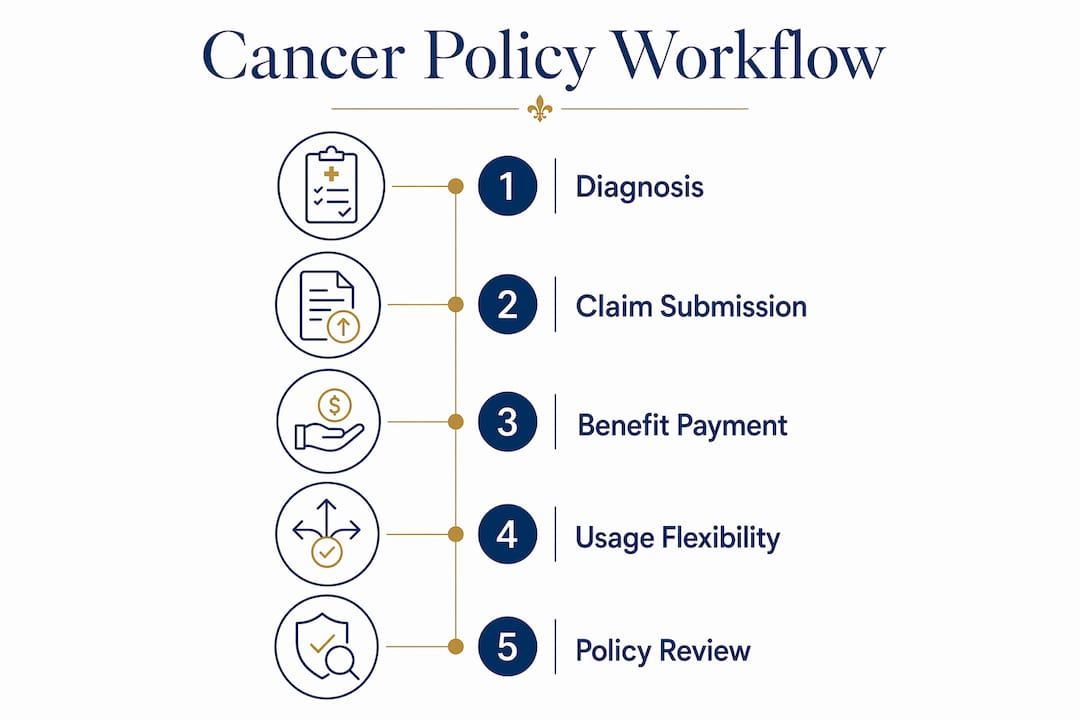
Cancer insurance activates after you receive a covered cancer diagnosis. The policy then pays benefits according to its schedule or lump-sum structure. Two main policy types exist.
Scheduled benefit policies pay predetermined amounts for each specific treatment or service. The policy lists every covered item with a dollar amount attached. Common examples include:
- Inpatient hospitalization (daily benefit)
- Surgery and anesthesia (per procedure)
- Chemotherapy (per treatment session)
- Radiation therapy (per session)
- Diagnostic imaging related to cancer
Lump-sum policies pay a single fixed amount upon confirmed diagnosis. You receive the full benefit at once and use it however you choose. Some people use lump-sum payouts to cover mortgage payments during treatment. Others use them for experimental therapies not covered by primary insurance.
Scheduled benefits policies offer predetermined payouts per treatment type, which makes budgeting predictable but can leave gaps if your treatment plan is complex or prolonged.
Pro Tip: Read the policy certificate before you buy. The certificate lists every covered service and its exact benefit amount. If a treatment is not listed, the policy does not pay for it, regardless of how standard that treatment is.
Claims typically require a confirmed diagnosis from a licensed physician, along with documentation of the specific treatment received. Processing time varies by insurer, but benefits generally arrive faster than reimbursements from major medical plans because the payment goes directly to you.
What does cancer insurance cover beyond hospital bills?
Cancer insurance coverage extends well beyond direct medical costs. Benefits can be used flexibly by policyholders for both direct and indirect costs, which is where these policies deliver real value.
Medical expenses typically covered
Most cancer insurance plans include benefits for the following:
- Chemotherapy and radiation therapy
- Surgery, including reconstructive procedures
- Inpatient hospital stays
- Anesthesia
- Bone marrow transplants
- Experimental or clinical trial treatments (varies by policy)
Non-medical expenses that benefits can cover
This is the category most people overlook. A cancer diagnosis disrupts your entire life, not just your health. Cancer-related costs include child care, travel to treatment centers, and lodging during extended treatment periods. Your cash benefit can cover all of these.
| Expense Category | Examples |
|---|---|
| Transportation | Flights, mileage, rideshare to treatment centers |
| Lodging | Hotel stays near cancer treatment facilities |
| Child and dependent care | Babysitting, after-school care during treatment |
| Home care | In-home nursing or rehabilitation services |
| Daily living costs | Rent, groceries, utilities during recovery |
| Lost income support | Partial replacement of wages during treatment |
The flexibility of cash benefits is the defining advantage of cancer insurance over other supplemental products. Your primary insurer pays providers. Cancer insurance pays you.
Benefits are often limited to specified amounts per treatment or service type, so the total payout may not cover all your costs. Reviewing the policy's maximum benefit caps before purchase is non-negotiable.
Pro Tip: People with Medicare Advantage Plans may already have some cancer coverage built in. Medicaid recipients often do not need supplemental cancer insurance at all. Confirm your existing coverage before adding a new policy.
What are the key limitations and exclusions of cancer insurance policies?
Cancer insurance has real restrictions that buyers frequently underestimate. Knowing them upfront prevents costly surprises.
Waiting periods are the most common limitation. Most policies require a waiting period of 30 to 90 days after purchase before benefits become active. If you are diagnosed during that window, the policy pays nothing.
Pre-existing condition exclusions are standard. Cancer insurance policies pay benefits only after diagnosis of a covered cancer and are not effective if cancer is already present at the time of purchase. This is a fundamental difference from ACA-compliant major medical plans, which cannot deny coverage for pre-existing conditions.
Key exclusions to watch for include:
- Skin cancers (many policies exclude non-melanoma skin cancers)
- Cancers diagnosed before the policy effective date
- Recurrences of a previously treated cancer (varies by policy)
- Treatments not listed in the policy schedule
- Benefits exceeding the policy's per-treatment or lifetime cap
Benefit caps limit total payout. A policy might cap chemotherapy benefits at $10,000 lifetime, which falls far short of actual chemotherapy costs for many diagnoses. The gap between the policy cap and real costs is a financial risk you absorb directly.
Cancer insurance also lacks ACA protections. Because these policies are excepted benefits, insurers can deny applications, impose waiting periods, and exclude conditions that ACA-compliant plans must cover. Never treat cancer insurance as a substitute for comprehensive major medical coverage.
How do you decide if cancer insurance fits your financial strategy?
Cancer insurance is not the right choice for everyone. The decision depends on your existing coverage, personal risk factors, and financial situation.
Work through these four questions before purchasing:
-
Does your primary health insurance coordinate with cancer insurance? The American Cancer Society advises verifying insurance coordination before purchase. Some primary plans restrict collecting benefits from both plans simultaneously, which makes the supplemental policy redundant.
-
What is your out-of-pocket maximum on your primary plan? If your major medical plan has a low out-of-pocket maximum, cancer insurance adds less value. If your deductible and out-of-pocket costs are high, the cash benefit fills a real gap.
-
Do you have a family history of cancer? Personal and family history directly affects both your risk and your insurability. Apply before a diagnosis occurs. Once cancer is present, coverage becomes unavailable.
-
Can you access cancer insurance through your employer? Group cancer insurance offered through an employer typically has fewer underwriting restrictions and lower premiums than individual policies purchased directly.
"Cancer insurance is not a substitute for comprehensive health coverage. It is a financial buffer that helps you manage the costs your primary plan leaves behind." — American Cancer Society guidance on supplemental insurance
Familyguardlh works with clients across 22 states to evaluate exactly this kind of coverage fit. A licensed agent can review your current plan, identify gaps, and determine whether a cancer policy adds genuine value to your financial protection strategy.
Key Takeaways
A cancer insurance policy pays cash benefits directly to you, not to providers, giving you flexibility to cover both medical and non-medical costs that primary health insurance leaves unpaid.
| Point | Details |
|---|---|
| Direct cash benefit | Benefits go to the insured, not providers, for flexible use on any cancer-related expense. |
| Two policy structures | Scheduled benefit policies pay per treatment; lump-sum policies pay one amount at diagnosis. |
| ACA protections do not apply | Cancer insurance is an excepted benefit, so insurers can deny coverage and impose waiting periods. |
| Coverage has caps | Benefits are limited per treatment and by lifetime maximums, which may not cover full costs. |
| Coordination check required | Confirm your primary plan allows dual claims before purchasing supplemental cancer coverage. |
Why cancer insurance is more nuanced than most people realize
People often come to me thinking cancer insurance is either a must-have or a waste of money. Neither view is accurate. The truth sits in the details of your specific situation.
The cash benefit structure is genuinely useful. When someone is going through chemotherapy, the last thing they need is to fight with an insurer over reimbursements. Having money deposited directly into their account to cover a hotel near a treatment center, or to pay for a family member to take time off work, removes a real burden. That flexibility has concrete value.
What I push back on is the idea that cancer insurance replaces careful primary coverage. I have seen people buy a cancer policy thinking it fills the role of comprehensive health insurance. It does not. The benefit caps are real. The waiting periods catch people off guard. The pre-existing condition exclusions are strict. A $500 per day hospital benefit sounds meaningful until you see a $40,000 treatment bill.
The timing of purchase matters more than most people realize. Applying while you are healthy, before any diagnosis or even a suspicious test result, gives you the best chance of approval and the broadest coverage. Waiting until a health scare appears on your record often means denial or exclusion of the very condition you are worried about.
My honest advice: treat cancer insurance as one layer in a broader financial protection plan, not as a standalone solution. Review your primary coverage first. Understand your out-of-pocket exposure. Then decide whether the cash benefit structure of a cancer policy fills a gap worth paying for.
— Shereka
Familyguardlh can help you find the right cancer insurance plan
Cancer insurance decisions require a clear picture of your existing coverage, your financial exposure, and the specific policy terms available in your state.

Familyguardlh is licensed in 22 states, including Florida, Texas, Georgia, Ohio, and Michigan, and specializes in supplemental and health insurance policies for individuals and families. Whether you are evaluating a cancer policy for the first time or reviewing an existing plan for gaps, the team at Familyguardlh can walk you through your options with no pressure and no jargon. Getting a clear answer on whether cancer insurance fits your financial plan starts with a single conversation.
FAQ
What is a cancer insurance policy in simple terms?
A cancer insurance policy is supplemental coverage that pays fixed cash benefits directly to you after a cancer diagnosis. The money can cover medical bills, travel, lost income, or any other expense.
Does cancer insurance cover all types of cancer?
Not always. Many policies exclude non-melanoma skin cancers, and coverage for other cancer types depends on the specific policy schedule. Always read the policy certificate for the full list of covered diagnoses.
Can I use cancer insurance benefits for non-medical expenses?
Yes. Cash benefits are flexible and can be used for rent, groceries, child care, travel, and lodging, not just medical bills.
Is cancer insurance the same as health insurance?
No. Cancer insurance is a supplemental product that pays indemnity-style benefits. It does not replace major medical coverage and does not carry ACA consumer protections.
When should I apply for cancer insurance?
Apply while you are healthy and before any diagnosis. Policies exclude pre-existing cancer conditions and impose waiting periods, so early application gives you the broadest eligibility.