

A hospital indemnity plan is a supplemental insurance policy that pays fixed, tax-free cash benefits directly to you each time you are hospitalized, making it one of the most practical tools for retirement health coverage. Unlike Medicare or standard health insurance, these plans pay you a set dollar amount per qualifying event, regardless of your actual medical bills. That cash goes straight into your pocket, with no restrictions on how you spend it. For anyone approaching retirement, a hospital indemnity plan retirement strategy can mean the difference between a manageable medical event and a serious dent in your savings.
How does hospital indemnity insurance work during retirement?
Hospital indemnity insurance is a fixed-indemnity supplemental plan that pays cash upon a qualifying hospitalization, not a reimbursement of your actual medical bills. The payout is triggered by the event itself. You get admitted to the hospital, and the plan pays you. The amount is predetermined in your policy, whether that is $500 per day, $1,000 upon admission, or a combination of both.
This structure creates a predictable cash flow that retirees can count on. Because the benefit is paid directly to you, you can use it for anything: your hospital copay, your mortgage payment, groceries, or transportation costs while you recover. There are no restrictions on how you spend the money.

Hospital indemnity plans are not primary health insurance. They sit alongside Medicare, Medicare Advantage, or employer retiree coverage. Think of them as a financial buffer that activates when you need it most.
Common benefit triggers include:
- Hospital admission: A lump sum paid on the day you are admitted
- Daily hospital confinement: A set amount for each day you remain hospitalized
- Observation stays: Many plans cover hospital observation, which Medicare often does not fully cover
- Ambulance transport: Coverage for emergency transport to a hospital
- ICU admission: Higher daily rates for intensive care unit stays
The tax-free nature of benefits is a significant advantage. The IRS generally does not tax fixed-indemnity benefit payments, which means the full payout works for you without a tax haircut.
Pro Tip: Review your Medicare Explanation of Benefits statements from the past two years. The out-of-pocket amounts you paid during hospital stays will tell you exactly how much indemnity coverage you actually need.
What are the prerequisites for enrolling in a hospital indemnity plan?
Eligibility for hospital indemnity plans is more flexible than most retirees expect. Many plans are guaranteed issue during open enrollment, meaning no medical exam is required and you cannot be turned down based on health status. Outside of open enrollment, some plans apply underwriting, which may include health questions.
Key enrollment considerations include:
- Age eligibility: Most plans are available to adults 18 and older, including those 65 and over on Medicare
- Medicare Advantage enrollment: If you are enrolled in a Medicare Advantage plan, you can typically add a hospital indemnity plan at any time during the plan's open enrollment or special enrollment periods
- Employer retiree benefits: Some employers offer hospital indemnity coverage as part of their retiree benefits package, often at group rates
- Waiting periods: Some plans impose a waiting period of 30 to 90 days before benefits begin for non-emergency hospitalizations
- Pre-existing condition clauses: Certain plans exclude conditions diagnosed within a set period before enrollment, so read this section carefully
- Portability: Most individual hospital indemnity plans are portable, meaning coverage continues regardless of your employment status after retirement
Monthly premiums for individual plans vary based on age, benefit amount, and the insurer. A basic plan with a $1,000 admission benefit and $100 daily benefit can run as low as $30 to $50 per month for a retiree in their early 60s, though pricing is not publicly standardized across all carriers.
Pro Tip: If you are still working and your employer offers hospital indemnity insurance as a voluntary benefit, enroll before you retire. Group rates are almost always lower than individual market rates, and you may be able to port the policy into retirement.
How to choose the right hospital indemnity plan for your retirement needs
Choosing the right plan starts with understanding your current coverage gaps. Medicare Part A covers inpatient hospital stays, but it comes with a deductible of $1,676 per benefit period in 2026. Medicare Advantage plans cap out-of-pocket costs, but those maximums often exceed $1,500 for even a short hospital stay. A well-chosen indemnity plan can offset those costs directly.
Assessing your financial exposure
Calculate your worst-case out-of-pocket scenario under your current Medicare or retiree plan. If a five-day hospital stay could cost you $3,000 out of pocket, you need a plan that pays at least that much in combined admission and daily benefits. Match the benefit structure to your actual risk, not a generic number.
Comparing plan features
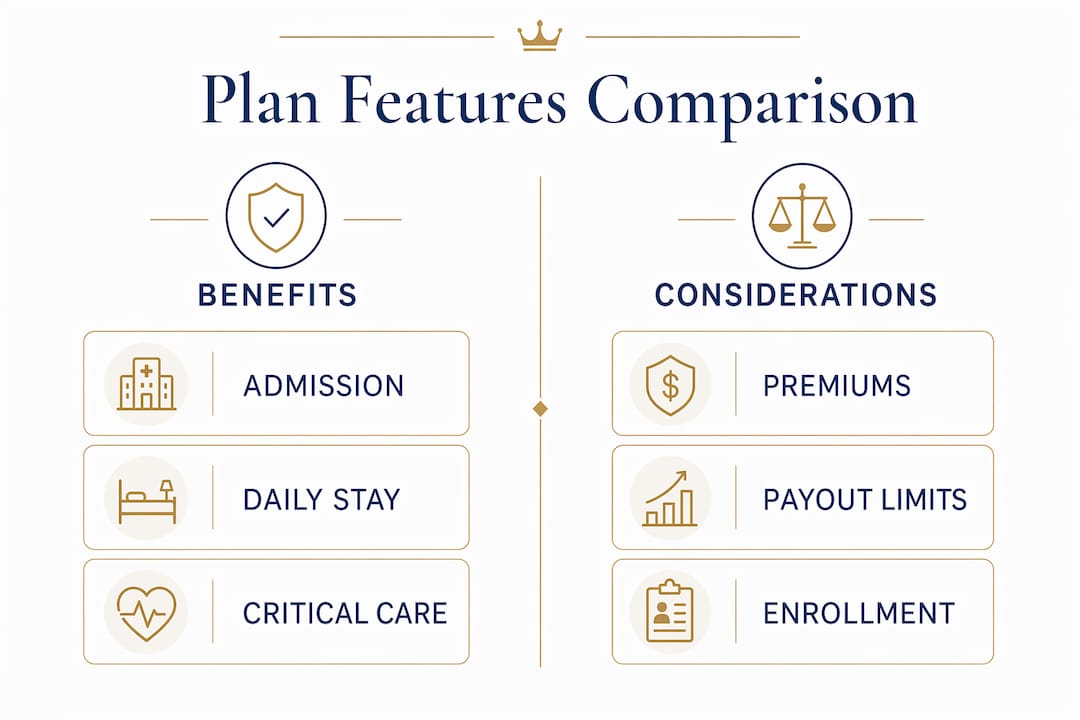
When evaluating plans, focus on these factors:
| Feature | What to look for |
|---|---|
| Admission benefit | One-time lump sum paid on the day of admission |
| Daily benefit amount | Per-day payout for each day of hospitalization |
| Benefit period | Maximum number of days covered per stay or per year |
| Observation coverage | Whether the plan pays for observation status stays |
| Ambulance benefit | Fixed amount for emergency transport |
| Waiting period | Days before coverage activates for non-emergency care |
| Pre-existing exclusions | Conditions excluded from coverage at enrollment |
| Portability | Whether coverage continues after retirement or job change |
Balancing premiums against payouts
Many retirees pair a $0-premium Medicare Advantage plan with a low-cost hospital indemnity policy. This combination can save around $1,680 annually compared to a premium Medigap plan, while still providing a cash safety net for hospital events. The math works when your indemnity premium is low and your potential hospital out-of-pocket exposure is high.
Pro Tip: Ask for a plan illustration showing the break-even point. If a $40/month premium pays a $2,000 admission benefit, you break even after just one hospital admission in about four years. Most retirees find that math very favorable.
Step-by-step process to add a hospital indemnity plan to your retirement coverage
Adding a hospital indemnity plan to your retirement health coverage is a straightforward process when you follow the right sequence.
-
Confirm your eligibility and timing. Determine whether you are in an open enrollment window for Medicare Advantage or a special enrollment period. Guaranteed-issue plans are easiest to obtain during these windows.
-
Review your current coverage. Pull out your Medicare Summary Notice or Medicare Advantage Evidence of Coverage document. Identify your hospital deductible, daily copays, and out-of-pocket maximum. These numbers define your coverage gap.
-
Gather your documents. You will need your Medicare ID number, current insurance policy details, and basic personal information. Some plans also ask for your primary care physician's name.
-
Compare plan options. Use a licensed insurance agent or a benefits counselor to review multiple plan structures. Focus on benefit triggers, daily amounts, and exclusions rather than premium alone.
-
Submit your application. Applications can be completed online, by phone, or through an HR benefits portal if you are still employed. Guaranteed-issue plans process quickly, often within a few days.
-
Set up premium payments. Most plans offer automatic bank draft or payroll deduction if you are still working. After retirement, automatic bank draft keeps coverage active without missed payments.
-
Understand the claims process before you need it. When you are admitted to a hospital, notify your indemnity insurer as soon as possible. Most plans require a claim form and a hospital admission summary. Benefits are typically paid within 7 to 14 business days of claim approval.
Key documents to keep accessible:
- Your indemnity insurance policy and member ID card
- The insurer's claims phone number and online portal login
- A copy of your hospital admission paperwork after any stay
Common mistakes to avoid with hospital indemnity plans in retirement
The biggest mistake retirees make is treating a hospital indemnity plan as primary health insurance. It is not. It does not pay your doctors, negotiate with hospitals, or cover prescription drugs. Retirees who misunderstand this distinction sometimes skip enrolling in Medicare or a Medicare Advantage plan, leaving themselves with catastrophic coverage gaps.
"Hospital indemnity insurance benefits are paid directly to the insured and can be used for any purpose, regardless of other coverage. There are no restrictions on how the beneficiary spends the cash benefit. But the plan pays you, not your providers, which means your primary insurance must still handle the medical billing."
Other common pitfalls include:
- Ignoring waiting periods. Enrolling in a plan and then expecting immediate coverage for a scheduled surgery often leads to a denied claim. Read the waiting period clause before you sign.
- Overlooking observation status. Medicare does not classify observation stays as inpatient admissions. If your indemnity plan only pays for inpatient admissions, an observation stay may not trigger a benefit. Look for plans that explicitly cover observation.
- Failing to update beneficiary information. After retirement, life changes. Review your policy annually and update beneficiary designations as needed.
- Not filing claims promptly. Most plans have a claim filing deadline, often 90 to 180 days after the hospital event. Missing that window forfeits your benefit.
- Letting coverage lapse after retirement. If you were covered through an employer group plan, confirm whether you can port the policy to an individual plan before your last day of work.
Experts emphasize viewing hospital indemnity insurance as a tool to manage retirement hospital expense risks without jeopardizing retirement savings. That framing matters. It is a financial planning instrument, not a medical one.
Key Takeaways
A hospital indemnity plan retirement strategy works best when it fills specific Medicare gaps with predictable, tax-free cash benefits rather than replacing primary coverage.
| Point | Details |
|---|---|
| Fixed cash benefits | Plans pay a set dollar amount per hospital event, not reimbursement of actual bills. |
| Tax-free payouts | Benefits are generally not taxed by the IRS, so the full amount works for you. |
| Medicare gap coverage | Indemnity plans offset Medicare Advantage out-of-pocket costs that often exceed $1,500 per stay. |
| Enrollment timing | Guaranteed-issue enrollment during open enrollment windows avoids medical underwriting. |
| Avoid common errors | Never use an indemnity plan as primary insurance, and always file claims within the policy deadline. |
Why I think most retirees underestimate this coverage
After years of working with people approaching retirement, I have noticed a consistent pattern. Retirees spend months comparing Medicare Advantage plans and Medigap policies, but they rarely think about what happens when a hospital stay generates costs that neither plan fully covers. That gap is real, and it shows up at the worst possible time.
A hospital indemnity plan is not glamorous. It does not come with a large network or a branded app. What it does is put cash in your hand when you need it most, and that cash can cover your deductible, your spouse's travel costs to visit you, or three months of groceries while you recover. I have seen retirees use their indemnity benefit to cover expenses that had nothing to do with the hospital bill, and that flexibility is exactly the point.
The math on these plans is also more favorable than most people realize. A $32 to $50 monthly premium that pays $1,000 or more upon a single hospital admission is a strong financial trade for anyone over 60. The annual savings potential compared to higher-premium supplemental plans can reach $1,680 or more. That is real money in retirement.
My advice is to add this review to your annual benefits checklist, right alongside your Medicare plan comparison. Coverage needs change as health changes, and a plan that was optional at 62 may become critical at 68. Start the conversation early, and do not wait for a hospital bill to motivate you.
— Shereka
Familyguardlh can help you find the right plan
Choosing the right hospital indemnity coverage for retirement takes more than a Google search. At Familyguardlh, licensed agents review your current Medicare or retiree coverage, identify your specific out-of-pocket gaps, and match you with hospital indemnity options that fit your budget and health profile.

Familyguardlh is licensed in 22 states, including Florida, Texas, Georgia, Ohio, and Pennsylvania, and works with retirees across a wide range of coverage situations. Whether you are still working and want to enroll before retirement or you are already on Medicare and looking to add a financial safety net, Familyguardlh offers a no-pressure coverage review to help you make a confident, informed decision.
FAQ
What is a hospital indemnity plan in retirement?
A hospital indemnity plan is a supplemental insurance policy that pays fixed, tax-free cash benefits directly to you upon hospital admission. It is designed to cover out-of-pocket costs that Medicare or Medicare Advantage does not fully pay.
Are hospital indemnity plan benefits taxable?
Hospital indemnity benefits are generally tax-free under IRS rules for fixed-indemnity plans. The full cash benefit goes to you without a federal income tax deduction in most cases.
Can I get a hospital indemnity plan if I already have Medicare?
Yes. Hospital indemnity plans work alongside Medicare, Medicare Advantage, and Medigap policies. Many retirees add an indemnity plan specifically to cover Medicare's hospital deductibles and daily copays.
When is the best time to enroll in a hospital indemnity plan?
The best time to enroll is during Medicare Advantage open enrollment or while you are still employed and eligible for group rates. Guaranteed-issue plans during open enrollment require no medical exam and cannot be denied based on health status.
How do I file a claim on a hospital indemnity plan?
Contact your insurer as soon as possible after a hospital admission. Submit a claim form along with your hospital admission summary. Most plans pay benefits within 7 to 14 business days of claim approval, and filing deadlines typically run 90 to 180 days after the event.